
The 3 most common new self-publisher mistakes are choosing a niche or keywords with no readers, using a cover, title and description that don’t match your genre, and doing no marketing at all. Almost every new publisher I talk to is making at least one. Below is each mistake, how to check yourself, and the one that costs the most sales.
Why Do New Self-Publishers Make So Many Mistakes?
You might think you aren’t making any. But when you are first getting started, you make a lot more mistakes than you’d imagine. When I first got started, I wasn’t aware of the top strategies, so most of my actions violated key rules and I didn’t realize it. I thought you wrote a book, put it out, and it would sell or it wouldn’t. I found out the hard way how important the title is, and the cover. By changing both, I saw a steady flow of sales come in. Then I started running Amazon ads, which gave an additional boost. If you are about to publish your first book, see how to publish a book on KDP for the steps.
Mistake 1: Is Your Niche, Genre or Keyword Wrong?
There are readers buying books on Amazon every day, like a river of readers. Our job is to find the ones who match the book we want to write. Ideally we don’t start writing until we know enough readers are already buying books like ours. That is writing to market, as opposed to the starving artist who puts work out and hopes. If you’re launching a new soft drink, you want to know the market wants it first. Same for books.
I use KDSpy to see which books, topics and keywords are selling. For example, “Puppy Training” was once a popular keyword. There weren’t that many books on it, yet the ones there ranked in the top hundred thousand. That ratio of books selling to books on Amazon told me it was a popular niche. Kindlepreneur says a sales rank under 100,000 suggests consistent movement (Kindlepreneur). Check the numbers again for your own niche today, because markets change.
You need an audience and not too many books. If I wrote “puppy hairstyling” and found no books, how would I know there’s an audience? If there are too many books, the competition is too high. If there’s no audience, sales are impossible. You could win the lottery, like the fidget spinner in 2017, but how would you know in advance? Take the time to make sure there is a market. See how much a self-published book earns.
If you have already written the book, you can still look at the keywords used in the other books in your genre and put them in your title. Changing the title is easy on the Kindle version. On print, the title and author must match the ISBN’s registration, and a significantly changed edition may need a new ISBN, so check KDP’s rules first (KDP: ISBNs).
Mistake 2: Do Your Cover and Description Match Your Genre?
Your cover should look like the other covers in your niche. Romance novels look one way and science fiction another. Look at the top sellers in your category. Your book should fit right in.
Many authors think readers choose a book for the quality of the text. They don’t. First they see the cover and click. Second they see the title with the keywords they’re searching for. Third they read the description. If you already have an audience, most of this is irrelevant. If you aren’t selling thousands of books a day, pay attention to who is, and make sure your book mixes in. Readers shouldn’t see the difference.
So don’t get creative with titles, covers and descriptions. Follow the formula the top sellers in your niche follow. See how to find the right book title.
Mistake 3: Are You Doing Any Marketing?
This is the mistake that costs you the most, every day. You have no reviews, no team, no email addresses collected, and you aren’t running ads. For me, Amazon ads made the biggest difference. Write to a market that is hungry to read, then run ads with keywords and covers that match your exact niche. Amazon’s ads are pay-per-click with no upfront fee, and you set a daily budget (Amazon Ads). The other piece is content marketing: videos, blogs, a podcast.
I keep hearing new authors imagine that when their first book hits the market they’ll see thousands of sales. Who is going to buy them? Do these people know you? Your book may be the highest quality of its type, but nobody will find it unless you market it. And if your cover and title are terrible, they never give it a chance. That is the unfair truth of self-publishing: marketing may matter more than the quality of the book. High-quality marketing with an okay book will dominate a high-quality book with terrible marketing. I’ve never seen authors get found on Amazon with lousy covers and titles and no ads.
Once readers find you through your marketing, you have a true fan who buys everything you write. For the bigger picture, read the pros and cons of publishing on all platforms.
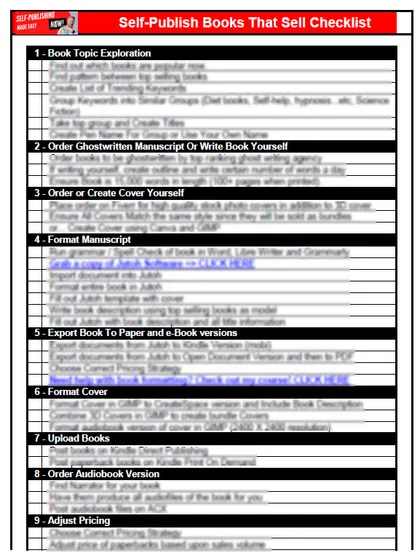
If you are new and want to avoid all three, the free 12-step checklist takes you through the steps in order, from choosing the niche to marketing.
Have you made one or more of these mistakes? Tell me which in the comments.
Listen to this episode on Spotify
Frequently asked questions
What is the biggest mistake new self-publishers make?
Doing zero marketing. A great book that nobody finds sells nothing, so plan for ads, an email list and content marketing from the start.
Can I change the title of a book I already published?
On the Kindle version it is easy. For print, check KDP's ISBN rules, because the title and author must match the ISBN's registration and a significantly changed edition may need a new ISBN (KDP: ISBNs).
How do I check if my niche has readers?
Search for books like yours and look at how many sell well. A sales rank under 100,000 suggests consistent movement (Kindlepreneur), and I use KDSpy to see many books at once.
Start with the free checklist
The checklist is the 12 steps I follow for every book I publish, from choosing a profitable niche with keyword research to setting up the marketing machine. It is free, and you get it straight away.